

The Great American Eclipse is Coming to the Sky Near You!
Informational article from the Madison County Library. Contact: Veronica Landmann, 936-348-6118
If the sun, moon, stars, planets, and all that encompasses our mysterious and majestic universe intrigues you, then keep reading! Some of you may remember the last eclipse in 2017.
The Madison County Library participated by handing out 500 eclipse safe viewing glasses to people who came from near and far. And by far, I mean we had visitors from New Mexico and Oklahoma visit Madisonville to pick up some eclipse glasses. It’s been 5 years, so don’t reuse the old eclipse glasses, they’re only good for 3 years. Since Texas will be in the path of the upcoming eclipses in October and April, we can again expect visitors from all over the nation to descend upon our state to view the ever-fascinating events.
The next Great American Eclipse will occur on Saturday, October 14 which is also the day of our local Mushroom Festival and Fair on the Square. While people are out and about enjoying the fair and festival, they may be tempted to look at the eclipse with unprotected eyes or with regular sunglasses.
Please be advised that it is crucial to view the eclipse only with eye protection that has filters for direct observation of the sun. The library will be handing out eclipse viewing glasses on a first come, first serve basis during the week leading up to the annular eclipse on October 14, 2023.
Then be sure and put them in a safe place and save them for the total eclipse that will occur on April 8, 2024. The glasses are courtesy of the Gordon and Betty Moore Foundation, StarNet, and the Space Science Institute.
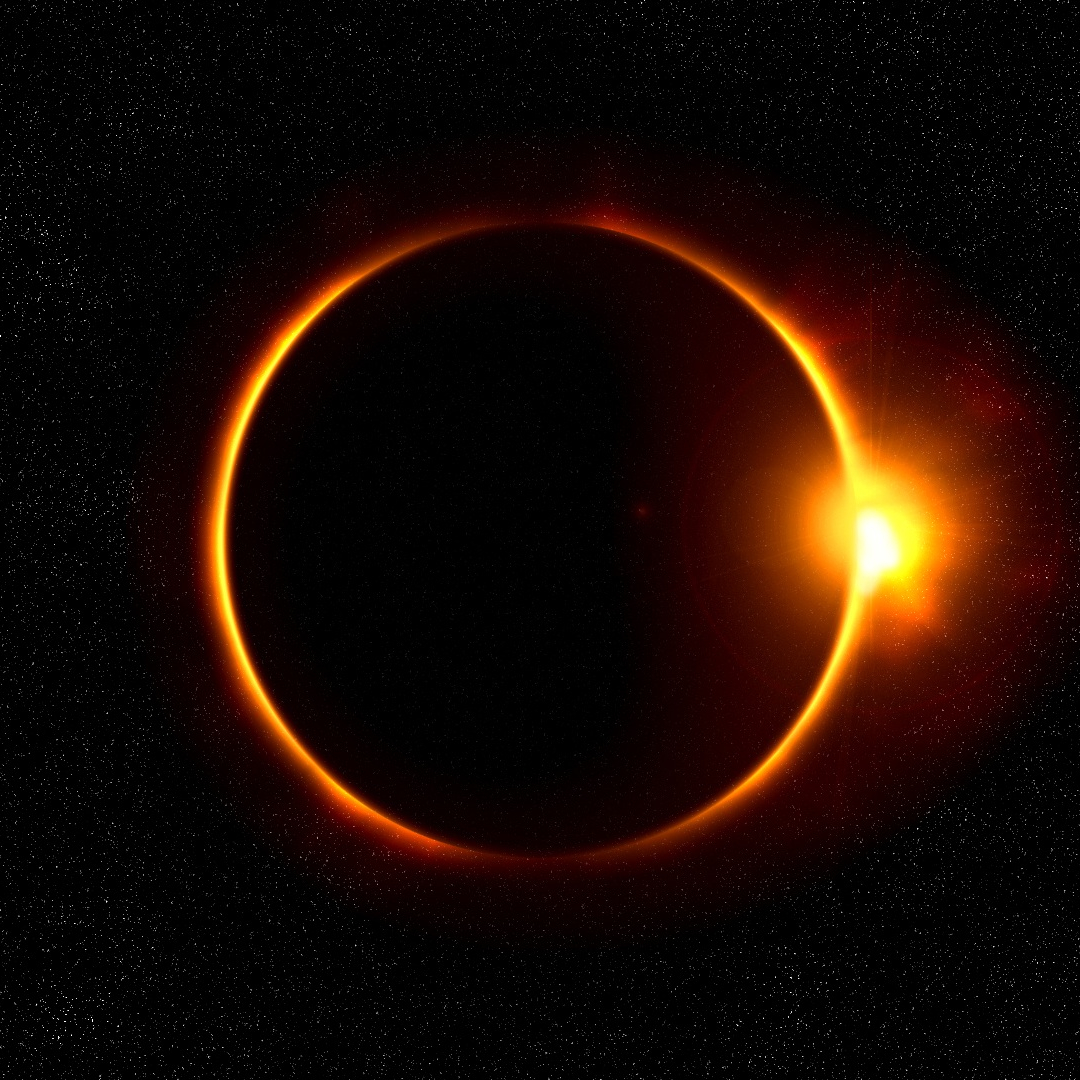
Texas is fortunate to be in the path of the annular eclipse that will last about two and a half hours total. An hour and 15 minutes will be partial solar eclipse, 4 to 5 minutes of annular solar eclipse, and then another hour and 15 minutes of partial. During an annular solar eclipse, the apparent size of the Moon’s disk is slightly smaller than the apparent size of the Sun’s disk.
Therefore, only the outer edge of the Sun remains visible and the Sun appears as a brilliant ring if you are inside the path of the annular solar eclipse. This otherworldly sight is often called a “ring of fire.” The annular solar eclipse crosses the United States from Oregon to Texas, beginning at 9:13 am Pacific Time and ends in Texas at 12:03 Central Time.
Be on the lookout for more information and for opportunities to engage directly with the eclipse as a Citizen Scientist. The Madison County Library applied for and was granted eclipse study kits to collect important data that will be submitted to NASA and other organizations. We will study the clouds and even record sounds before, during, and after the eclipse. The Eclipse Soundscapes Project is a NASA Citizen Science project funded by NASA Science Activation that is studying how eclipses affect life on Earth.
Some evidence shows that animals and insects react to solar eclipses.
Eclipse Soundscapes is collecting observations and sound data from the October 14, 2023 annular eclipse and the April 8, 2024 total solar eclipse and analyzing that data in 2024 and 2025.
There are opportunities for amateur astronomers in our area if you are intrigued by the sky and stargazing. There is the Huntsville Amateur Astronomy Society and the SHSU Observatory and Planetarium. Find them on Facebook or the SHSU website for more information. The Brazos Valley Astronomy Club meets every third Friday at 7:30 pm. Their information can be found at https://www.brazosvalleyastronomyclub. org or on their Facebook page. Also, visit the Madison County Library in September and October for more information on our events and how you can become a Citizen Scientist.
